Bold neon décor inspired by Las Vegas
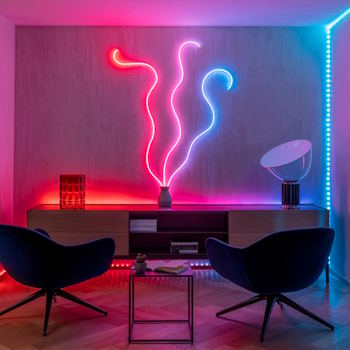
Las Vegas doesn't win anyone over with sober architecture. It wins with light. That unmistakable glow that turns a desert night into something from another planet — rose pink, electric blue, neon green — has become a collective symbol of boldness. And in recent years, it's moved off the facades and into people's homes.
Neon in modern décor isn't kitsch when it's used well. It's intention. It's knowing exactly where to place it, which color to choose, and what to leave alone around it. The difference between a space that impresses and one that exhausts is in the details — and that's exactly what's worth talking about.
Real neon or flexible LED?
Before any aesthetic decision, there's a practical question: traditional gas neon and LED neon-effect strips are completely different products, with different costs and applications.
Gas neon has that organic glow — slightly irregular, warm in a way no LED technology fully replicates. It's more expensive, more fragile, and requires professional installation. For residential projects with a controlled budget, flexible LED with a translucent profile delivers 90% of the visual effect at a fraction of the cost — and can be shaped into any form or phrase you want.
The choice depends on the use. For a single focal piece in a living room, gas neon is worth the investment. For light strips on shelves, countertops, or mirror frames, LED is more versatile and just as impactful.
What Las Vegas and experience design have in common
Las Vegas was built to create specific emotional states — energy, euphoria, the feeling that something special is happening right now. Interior designers and entertainment operators study exactly the same principles. It's no coincidence that platforms like the portugal betting sites invest heavily in visually stimulating interfaces, because they understand that the perceived environment — whether physical or digital — directly affects how a person feels and how long they stay. In décor, the logic is identical: neon light doesn't just illuminate a room, it defines the room's personality.
Where neon works — and where it doesn't
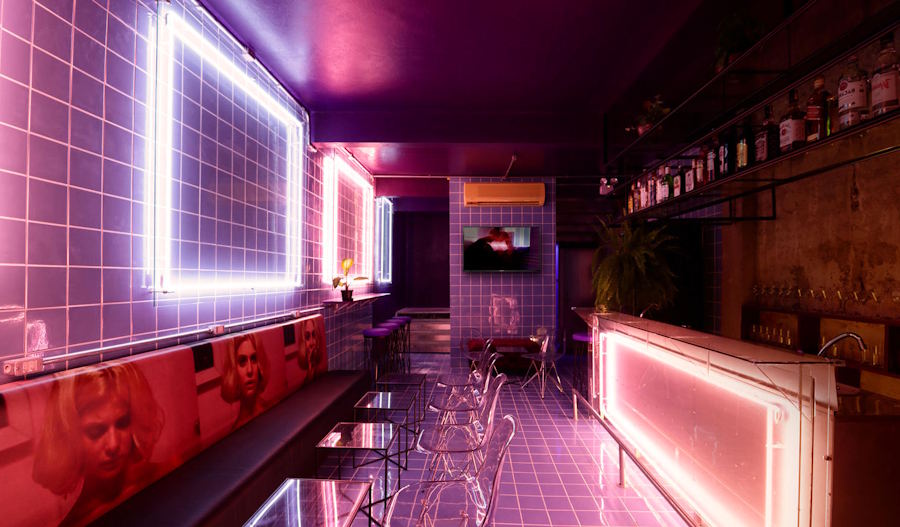
The most common mistake is spreading it around. One neon light in a small space already transforms it. Two can work if there's color coherence and clear intention. Three or more, in most cases, become visual noise.
Spaces where neon delivers its best results:
- Home office or bedroom — wall behind the desk or headboard, as a single focal piece
- Entertainment area or home bar — here neon has a natural emotional context, it works without forcing anything
- Hallway or entryway — a sign or geometric shape on a dark wall creates immediate impact
- Bathroom — a mirror framed with rose or warm white LED neon strip is one of the most elegant and underrated applications out there
Where to avoid it: kitchens with plenty of natural light, formal dining rooms, and any space where the aesthetic is minimalist or organic. Neon needs context — it needs a setting that justifies its presence.
Color, wall and balance
The wall matters as much as the light
Neon against a white wall has a very different effect than neon against a dark one. On white, the light dilutes — it loses power, loses drama. Against charcoal grey, forest green, petrol blue or black, the same light gains depth and contrast. If the wall can't be painted, a dark MDF panel behind the piece solves the problem elegantly.
Which colors work in residential décor
- Pink and lilac — the most versatile, work in bedrooms, bathrooms and home offices
- Warm white — the most discreet, almost passes for sophisticated conventional lighting
- Electric blue and neon green — more impactful, they call for spaces with a bolder overall concept
- Red — the hardest to balance, works in very specific contexts like bars and game rooms
Neon is here to stay in interior design — not as a passing trend, but as a tool for personality. When positioned well, it turns an ordinary space into one people remember. And ultimately, that's what good design has always been after: creating places that stay with you long after you've left them.